
Mission
The research project Adaptable Earth Observation System’s goal is to study the changing climate and weather patterns in the Saint-Lawrence Valley while also looking at the biological effects of the climate change. For this purpose, new adaptable laboratories have been designed by McGill University. At the Gault Nature Reserve in Mont-Saint-Hilaire, a new building was built, the Earth Observation System-Laboratory, which is housing a biological wet lab, an operation base for meteorological deployment and a mobile laboratory deployment site. A new molecular biology laboratory at McGill’s Central campus has been built as well, permitting advanced analysis of the samples collected in the field.
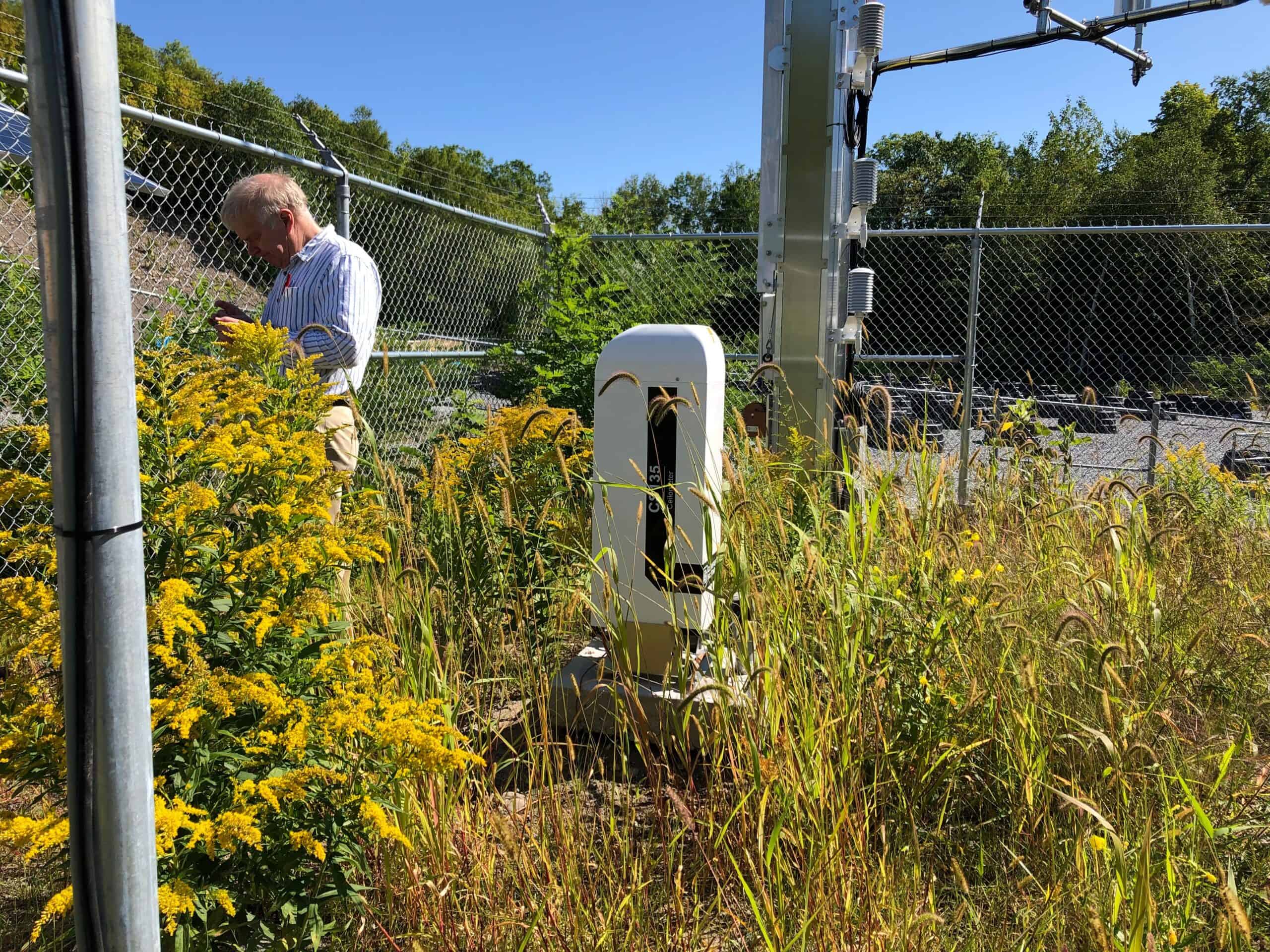
An important component of the acquired infrastructure are the 7 meteorological stations, known as climate sentinels, which are fully instrumented to measure surface properties including: temperature at 8 different heights, winds, snow, humidity, visibility, precipitation, radiation and CO2 as well as profiling equipment such as micro rain radars (MRR) and ceilometers. In addition, the project acquired 2 AERI profiling IR radiometers installed in Montreal, Mont-Saint-Hilaire and 2 Halo scanning doppler lidars are installed on either side of the Saint-Lawrence River to monitor air pollution in Montreal downtown core.
The project recently acquired 2 requestable, transportable, customizable, and autonomous laboratories housed in Ford Transit vehicles as well as transportable equipment. The mobile equipment includes: two portable Upper Air Sounding systems, a portable MRR pro radar, a Halo scanning doppler lidar and a portable AERI radiometer. The mobile laboratories include both meteorological and biological instruments and can be equipped with a trailer to expand the research capacity.
These equipment and infrastructures have been acquired with the financial contribution of the Canadian Foundation for Innovation, the Quebec Government, McGill University and UQAM.